


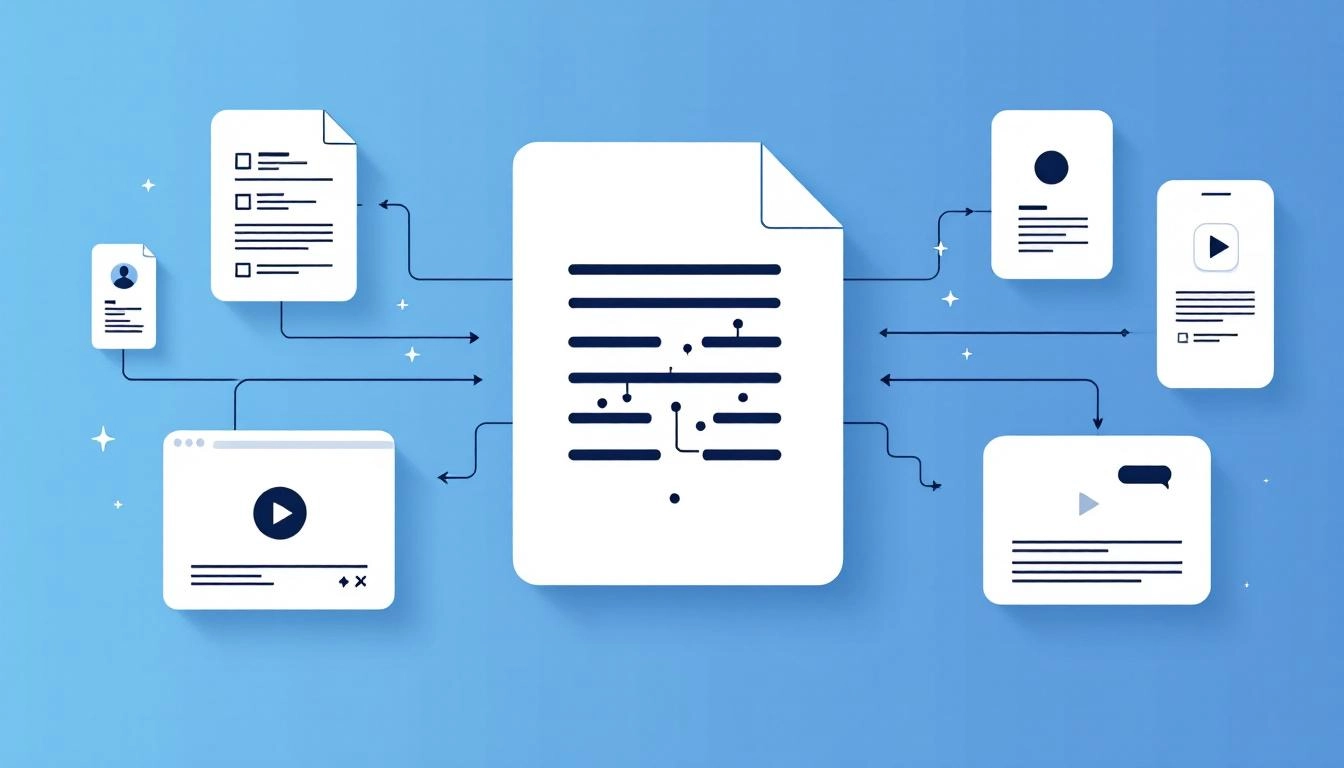
How to Repurpose Content for Different Platforms with AI, Turning One Idea into Channel‑Ready Assets
Your audience moves from feed to inbox to search in minutes. The post that wins on Instagram will not land the same way on LinkedIn or YouTube. The answer is not creating more content from scratch. The answer is to repurpose content with intent, then use AI to adapt the message, structure, and format for each channel without losing your brand voice.
Start with a Core Idea, Not a Copy
Effective repurposing begins with a solid core idea that solves a problem for your audience. Treat that idea as your narrative spine. From there, you adapt the angle and packaging to match the context and consumption habits of each platform. This protects message clarity, improves relevance, and saves time.
Turn your pillar asset into a system. Map the audience job to be done, define the channel purpose, then plan the formats that will move people from awareness to action. If you already document this in a content automation workflow, you can scale output without fragmenting your message.
An AI‑Assisted Repurposing Workflow You Can Repeat
AI should accelerate the boring parts, not replace your judgment. Use AI to condense, reframe, and format, then human edit for accuracy and tone. A simple, repeatable workflow keeps quality consistent across platforms.
- Identify the pillar asset and extract three to five takeaways that matter to each audience segment.
- Choose platform goals, for example reach on TikTok, saves on Instagram, clicks on LinkedIn, watch time on YouTube.
- Prompt AI to transform the takeaways into platform‑specific drafts, hooks, and CTAs.
- Edit for brand voice, add visuals or b‑roll notes, and finalize metadata like titles, tags, and captions.
- Publish, tag with UTMs, then review performance to refine prompts and formats next round.
Save your best prompts as AI repurposing templates so your team can produce consistent content at speed, even when multiple contributors are involved.
How to Adapt for Each Platform Without Losing the Thread
Lead with a specific professional outcome and back it with proof. Use a clear opening line, a concise story, and a practical takeaway. Keep sentences tight. Add a call to action that invites commentary or a quick poll. Tease deeper assets like case studies or webinars only if the post already delivers standalone value. Consistency beats virality for B2B credibility.
Think saves and shares. Convert your core points into carousels with one idea per slide and strong visual hierarchy. Use Reels for quick before and after transformations or behind the scenes. Captions should add context, not repeat slides. Keep hooks curiosity driven, like a promise to fix a common mistake in under a minute. Close with a simple action, save this for later or comment with your niche.
TikTok
Front load the hook in two seconds. Use a strong statement, a counterintuitive claim, or a visual change. Teach one actionable step. Add on screen text that mirrors spoken key phrases for silent viewers. End with a next step that chains to part two or a playlist. Keep energy and pacing high, and let authenticity outweigh polish.
YouTube
Structure for watch time. Open with the promise, preview the chapters, then deliver in clear segments. Embed pattern breaks every 20 to 30 seconds with b‑roll, graphics, or quick list recaps. Titles should highlight the problem and outcome. Thumbnails should show a visual contrast, not a crowded collage. Repurpose shorts from key moments that stand on their own.
X, formerly Twitter
Compress your point into a crisp angle. Use threads to expand a single idea into three to five connected insights. Avoid vague platitudes. Quote charts or data points to add credibility. Link out only after you earn attention with a complete thought on platform.
Newsletters
Translate the pillar piece into a simple narrative arc, problem, insight, action. Open with a relatable scenario. Add one diagram or pull quote. End with a practical checklist or template. Your goal is trust and retention, not click bait. Use a consistent section pattern so readers know what to expect.
Blogs
Make the blog the canonical version of your idea. Optimize around search intent, define terms your audience actually uses, and organize scannable subheads that still work as a cohesive argument. Embed your short video or carousel for multimodal depth. Close with internal pathways to related content and a single, clear conversion step.
Turn One Asset into a Week of Multi‑Channel Content
Plan distribution before you hit publish. When you know the derivative formats in advance, you can capture assets like vertical b‑roll, quotes, and diagrams while creating the original.
- From a webinar, produce a blog summary, a YouTube highlight reel, three Instagram carousels, two TikTok tips, and a LinkedIn case study post.
- From a research report, publish a data story blog, a chart thread on X, a LinkedIn slideshow, and a short video explaining one surprising stat.
- From a podcast, create an authority snippet for Reels, an email letter with expanded context, and a quick how‑to post on LinkedIn.
Keep Brand Voice Consistent, Even as Formats Change
Great repurposing protects your brand storytelling. Document tone pillars, for example candid, pragmatic, optimistic, along with do and do not phrasing. Give AI a style guide and examples so it can draft in your voice. Then human edit for nuance. Consistency builds recognition, which improves performance across every algorithm.
Optimize for Each Algorithm with Lightweight Tweaks
You do not need to reinvent the message for every channel. You only need to respect the format. Adjust the hook length, the first three seconds of video, the reading level, and the visual ratio. Tag people or brands only when relevant. Add captions to all videos for accessibility and retention. These small choices compound into bigger reach and more conversions.
Measure What Matters, Then Feed It Back into Creation
Pick two north star metrics per platform. For example, saves and shares on Instagram, watch time on YouTube, click through on LinkedIn, reply rate in email. Add UTMs to links so you can attribute pipeline and revenue, not just vanity numbers. Every month, retire a format that underperforms and double down on the assets that compound results. Repurposing is a system, not a stunt.
Common Pitfalls to Avoid
Repurposing fails when it becomes copy and paste. Watch for these traps and correct them early.
- Reposting the same creative everywhere without reframing the hook.
- Ignoring the first line or first frame, the only part most people see.
- Letting AI override your brand voice instead of assisting it.
- Chasing trends that do not serve your strategy or audience intent.
Prompts and Mini‑Templates to Speed Up Drafts
Keep reusable prompts that pull out the right pieces fast. Here are simple starters you can adapt to your brand voice.
- LinkedIn opener: The fastest way to [desired outcome] without [common objection] is to [key action]. Here is how it works in three steps.
- Instagram carousel: Slide 1 hook, You are losing [benefit] because of this mistake. Slides 2 to 6, one fix per slide with a visual. Last slide, Save this checklist.
- YouTube hook: In the next [time], you will learn how to go from [before state] to [after state], even if [objection].
Bring It All Together with AI, Process, and Purpose
When you anchor content to a core idea, define the channel job, and let AI handle formatting and first drafts, you create more value with less effort. You protect quality, you stay consistent, and you reach people where they prefer to learn. That is how you scale content without burning out your team.
Start creating smarter content with MyCopyHub’s AI assistant today.

